
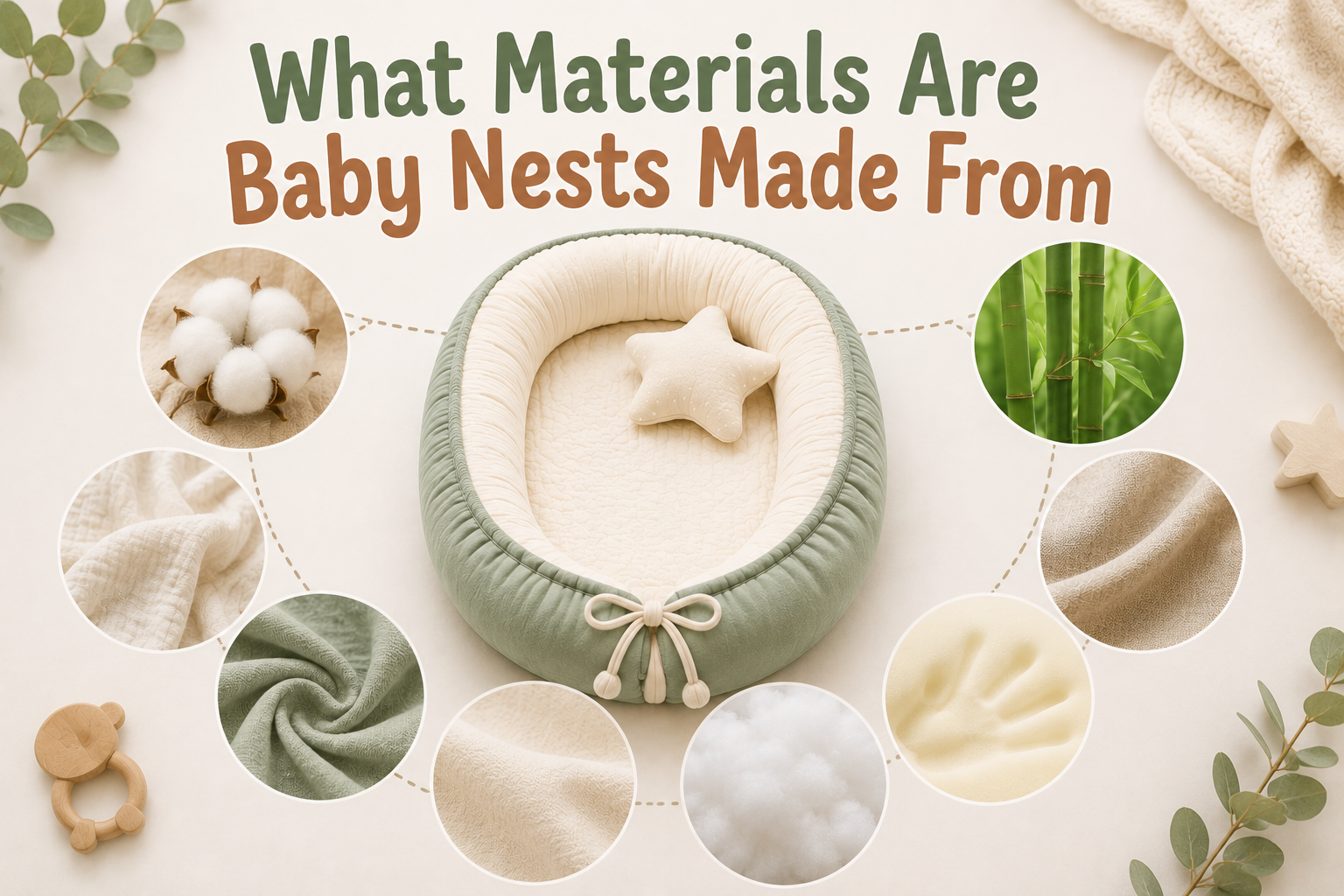
When shopping for a baby nest, one of the most important factors to consider is the material it’s made from. While colors and designs often catch the eye first, the fabrics and filling inside the nest play a much bigger role in determining comfort, durability, breathability, and ease of maintenance.
Since babies have delicate skin and spend a great deal of time resting and playing during their first months, choosing high-quality materials can make a significant difference in their daily comfort. Understanding the different fabrics and fillings used in baby nests will help you make a more informed decision and select a product that best suits your family’s needs.
In this guide, we’ll explore the most common materials used in baby nests, explain their advantages and disadvantages, and share tips for choosing the right combination for your baby.
Why Material Choice Matters
A baby nest is used frequently during supervised awake time, making it one of the most touched baby products in your home. The materials affect much more than appearance—they influence how the nest feels, how well it breathes, how easy it is to clean, and how long it lasts.
High-quality materials can provide:
- Better airflow
- Improved softness
- Greater durability
- Easier maintenance
- Reduced skin irritation
- Longer product lifespan
Poor-quality materials, on the other hand, may lose their shape quickly, become rough after washing, or trap heat and moisture.